
The Indigenous World 2026: Kanaky (New Caledonia)
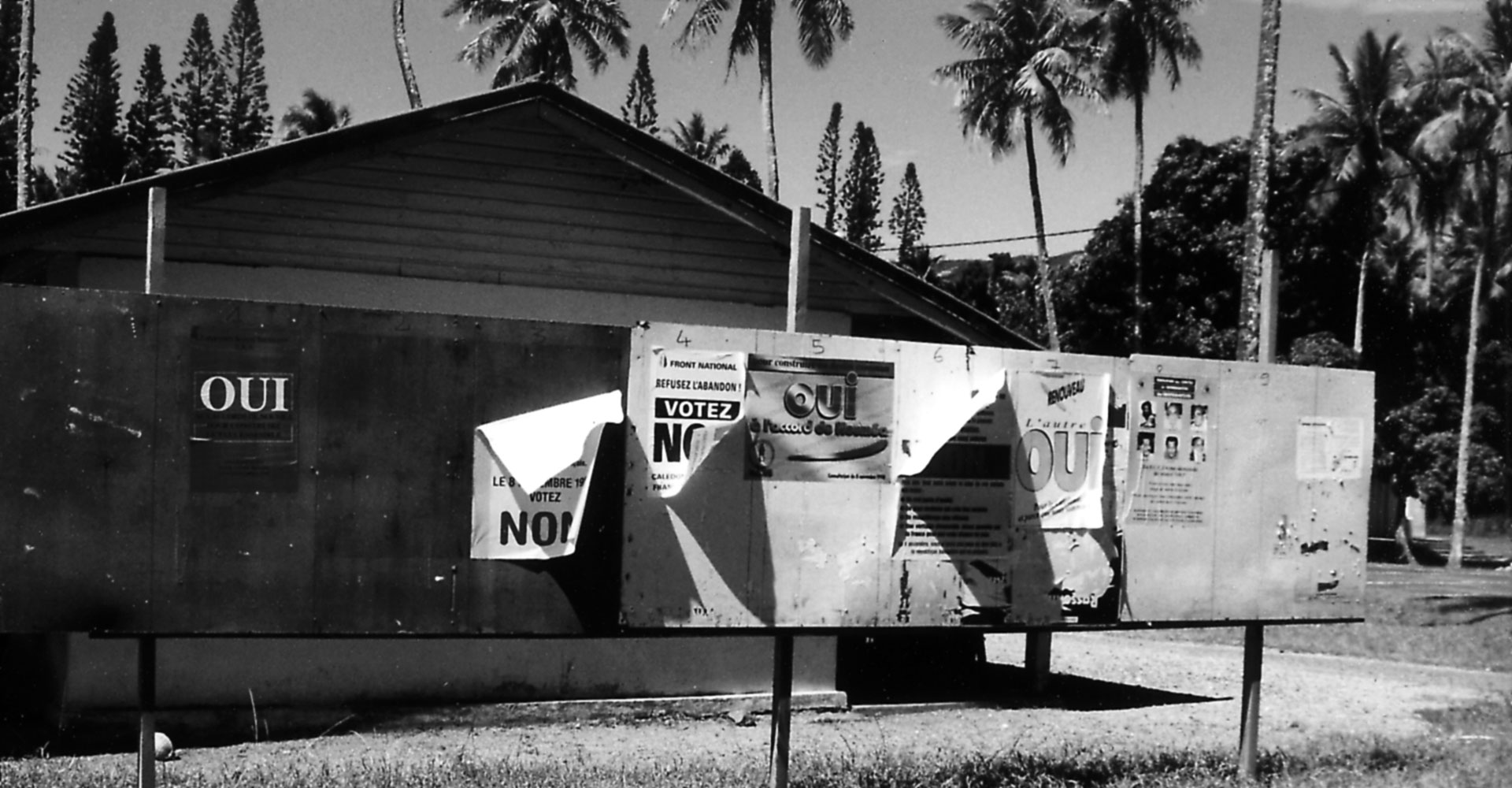
Kanaky (New Caledonia) is an overseas country and territory of the French Republic located 2,000 km off the north-east coast of Australia. France took possession of Kanaky in 1853. Kanaky is on the UN list of territories to be decolonized (Non-Self-Governing Territories).[1] This Melanesian territory had been occupied for thousands of years by the Kanak Indigenous people, who had developed their own culture and institutions. Together with French Polynesia and Wallis and Futuna, Kanaky is one of three French collectivities in the Pacific. From 1887 until 1946, as Indigenous subjects of the French Empire, the Kanaks were subject to the Code de L’Indigénat (Indigenous Code), which excluded them from political or public engagement, established reservations and restricted their freedom of movement.[2] In 1946, the Kanak were granted French citizenship. As French citizens, they are able to participate in political elections including municipal, territorial and also provincial, legislative, presidential and European elections.
The Indigenous Kanak people, estimated at 60,000 in 1853, had fallen to 27,000 by 1920.[3] At the turn of the 1970s, an influx of new groups turned the Indigenous population into a demographic minority (41% of the population). The New Caledonia National Statistics Office reported in its 2019 census that the population of New Caledonia stood at 271,407, where 41.2% of the archipelago's inhabitants identify as Kanak, 24.1% as European and 8.3% as Wallisians and Futunians. The rest of the population is divided between Tahitian, Indonesian, Vietnamese, Ni-vanuatu, other Asian, and other “communities”.[4]
Kanaky is a member of the groupe du Fer de lance mélanésien [Melanesian Spearhead Group], an alliance of Melanesian countries comprising the Solomon Islands, Papua New Guinea, Vanuatu, Fiji, Indonesia (associate member) and the Kanak and Socialist National Liberation Front (FLNKS), officially created in March 1988 in Port Vila.[5]
The first Indigenous intellectuals of the 1960s-70s reversed the stigma of the word “Canaque”, making it a symbol of identity and political pride under the initial English spelling of Kanak. The 1998 Nouméa Accord,[6] the agreement laying out the official process to self-determination, independence, and full sovereignty, officially recognized this terminology.
Most New Caledonian administrations do not disaggregate data by ethnicity, making it difficult to obtain reliable socio-economic indicators on the situation of the Kanak in Kanaky society. However, the Kanak are disproportionately represented in the prison system,[7] and account for approximately 80% of the inmates of the country's only prison, with Oceanians as a whole (Kanak, Wallisians and Futunians, Polynesians, Ni-Vanuatu) making up 90% despite accounting for less than 50% of the population.
The wealth gap is much more pronounced than in France: in the Nouméa metropolitan area, the poorest 10% of households earn, on average, 13 times less than the richest 10%, whereas this ratio is 5 to 1 in metropolitan France.[8] According to a recent study conducted in the Northern Province, Kanak people in a similar situation (same age, sex and qualifications) earn an average 32% less than non-Kanak people.[9]
This article is part of the 40th edition of The Indigenous World, a yearly overview produced by IWGIA that serves to document and report on the developments Indigenous Peoples have experienced. Find The Indigenous World 2026 in full here
After the 2024 anti-colonial uprising led by the Kanak people
More than a year after the serious events of 2024 in Kanaky,[10] the findings of the UN bodies report a worrying deterioration in the political, social and human rights situation, revealing the failure of the decolonization process initiated by France.[11] The Kanak popular mobilization is part of a response to persistent institutional violence and colonial policies that marginalize the Indigenous people in their own country, contradicting the spirit and the letter of the 1998 Nouméa Accord or the third referendum of 12 December 2021, organized without the Free, Prior, and Informed Consent (FPIC) of the Kanak people.
Attempts to modify the electoral roll, which are largely perceived by the Kanak people as a settler-colonial strategy, have heightened tensions and served as a pretext for excessive and disproportionate use of force by France,[12] accompanied by a heavy and permanent militarization of the territory. The Kanak people and the FLNKS[13] denounce the lack of independent investigations into the deaths of young Kanaks in 2024 as well as the deportation of political prisoners[14] under conditions contrary to international standards.
Despite numerous UN recommendations,[15] no substantial corrective measures have been implemented by France. The Kanak Indigenous people and the Socialist National Liberation Front (FLNKS) therefore reject any draft agreement imposing the definitive integration of Kanaky into the French Republic to the detriment of the right to self-determination. In accordance with international law, particularly UN Resolution 1514,[16] the Kanak people reaffirm that only full sovereignty will allow for a just, peaceful, and lasting decolonization.
Review of France by the UN Committee on the Abolition of Torture on the situation of the Kanak people and Kanaky – 30 April 2025
In its concluding observations published on 30 April 2025, the UN Committee against Torture expresses serious concerns about the human rights situation in New Caledonia following the events of May 2024.[17] It cites credible allegations of excessive, including lethal, use of force by police, gendarmes, and armed forces deployed in the context of political protests related to the proposed electoral reform. This violence resulted in the deaths of several people, primarily Kanaks, as well as numerous injuries.
The Committee also condemns arbitrary detentions, ill-treatment of demonstrators, and a prison situation marked by overcrowding and the persistent overrepresentation of Kanak Indigenous Peoples. It expresses grave concern about the involuntary transfer of Kanak detainees to mainland France and the prolonged solitary confinement of FLNKS President Christian Tein, in violation of international standards.
From a perspective grounded in dignity, justice, and the rights of Indigenous Peoples, the Committee calls on the French State to conduct independent investigations, guarantee effective reparations, strictly regulate the use of force, and end practices that violate the fundamental rights of the Kanak people—an essential condition for lasting peace that respects international law. (See report of the Drehu customary council of New Caledonia).[18]
5-8 May 2025: Deva conclave
The conclave of Deva,[19] held in early May 2025, revealed the deep political divisions surrounding Kanaky's self-determination. Despite the presence of the French State, represented by Overseas Minister Manuel Valls, and representatives of both pro-independence FLNKS and anti-independence parties, no agreement was reached on the institutional future, particularly regarding the composition of the electoral body and the consultation schedule—central points for respecting the right to self-determination.
Kanak independence activists denounced the French State's manipulation of the dialogue to maintain the colonial status quo, while some loyalists opposed any full recognition of Kanak sovereignty. This failure exacerbates political and social uncertainty,[20] and reflects the risk of renewed tensions. For the Kanak people, self-determination cannot be reduced to institutional compromises; it requires the full recognition of their political, cultural, and territorial rights, in accordance with international law and the UN Declaration on the Rights of Indigenous Peoples (UNDRIP) and UN General Assembly Resolution 80/98 adopted 5 December 2025.[21]
The human rights situation of the Indigenous Kanak people
Kanak political prisoner
The report by the Kanaky Solidarity Collective highlights the deportation to France of 69 Kanak prisoners since May 2024, in a prison context marked by structural racial discrimination and detention conditions denounced for years. These deportations, carried out in secrecy, have isolated the detainees more than 17,000 km from their families, exacerbating trauma, psychological distress, and social breakdown. The families, abandoned without institutional support, face a heavy economic and human burden. The report concludes that these transfers constitute violations of international law, particularly the right to family life and the principle of self-determination of the peoples of a non-self-governing territory. Finally, it emphasizes that the French State is obstructing requests for their return to their homeland, despite several court rulings in favour of the detainees.[22]
Militarization of the territory
We can still see today that the non-self-governing territory of Kanaky continues, despite warnings and denunciations by Kanak customary and political institutions, to undergo militarization.[23] Kanaky's situation is that there are more than 2,600 police officers[24] and gendarmes deployed on the ground, along with reinforced elite units and armoured intervention vehicles, including 16 Centaure armoured personnel, and 1,650 military and civilian personnel of the armed forces in Kanaky.[25]
Mass arbitrary arrests
In terms of the 2024 arrests, the judicial report, compiled at the end of April 2025, showed: 502 referrals, 650 deferred court summonses, 243 incarcerations, 520 alternative measures, and 600 cases dismissed without further action. Several figures from the independence movement[26] have been arrested, including Christian Tein, President of the FLNKS.
Undignified detention conditions in Nouméa, Camp-Est
At Nouméa Prison, nearly 600 inmates are crammed into cells designed to hold 400. At Camp-Est, in the decrepit buildings inherited from the penal colony, more than 90% of the prisoners are Indigenous Kanaks. After 15 months of silence, the Nouméa prosecutor's office has confirmed the opening of a judicial investigation into the death of an inmate at Camp-Est prison during the May 2024 riots.[27] This follows an investigation by Le Monde revealing possible violence and failings within the prison. The case reignites questions about the prison conditions, which have been denounced for several years. It also highlights the lack of transparency surrounding the management of the prison during the 2024 events.
In October 2025, 50 Kanak detainees at Camp-Est filed an emergency appeal with the judge to denounce inhumane detention conditions. The court recognized a serious violation of human dignity and ordered urgent measures: end sleeping on the floor, exterminate rats and insects, and instal partitions in the toilets. These actions are to be implemented quickly. However, broader demands, such as reducing prison overcrowding, were rejected as they fall outside the scope of the emergency appeal.[28]
The Bougival Agreement
The draft agreement resulting from the Bougival discussions[29] engages the pro-independence movement and the Kanak Indigenous customary institutions in a profoundly asymmetrical negotiation, where the concessions demanded are immediate, substantial, and largely irreversible, while the counter-offers from loyalists[30] and from France remain beyond direct political control. This situation weakens the historical trajectory of decolonization pursued by the Kanak people and their legitimate representatives.
From a legal standpoint, the text maintains the appearance of continuity, with the right to self-determination recognized by international law.[31] In reality, it effects a fundamental shift: the proposed process now falls under the category of internal decolonization within the French Republic rather than external decolonization leading to full sovereignty. This shift constitutes a major historical rupture as it transforms the Kanak people's struggle for national emancipation into a project of controlled autonomy, with no political deadline or any guarantee of escaping the French constitutional framework.
The agreement establishes the replacement of the Kanak people, recognized as an Indigenous people, with a new and legally undefined entity: the “Caledonian people”. This construct dilutes the recognition of the Indigenous Kanak people within a demographic group in which they are already a minority and destined to become even smaller. This choice entails an implicit renunciation of the Kanak people's right to decolonization, in favour of an essentially cultural and symbolic recognition, comparable to models of Indigenous recognition within non-Indigenous states.
The introduction of a fundamental law adopted by Congress constitutes a genuine institutional step forward in terms of self-organization. However, this normative capacity remains strictly subordinate to the national organic law, adopted and amended solely by the French State. The three-fifths supermajority requirement within the Congress of New Caledonia effectively grants a permanent veto to anti-independence forces, neutralizing any possibility of substantial progress towards political emancipation. The most sensitive elements—the country's name, symbols, governance, and financial regulations—are thus relegated to an uncertain future.
The mechanisms for transferring powers, presented as a step towards sovereignty, are largely a legal illusion. Sovereign powers remain subject to complex procedures, the explicit agreement of the State, and successive consultations, creating a lasting structural deadlock. Similarly, the so-called “Caledonian nationality” lacks any real legal autonomy: it remains a subcategory dependent on French nationality, without international recognition or sovereign scope.
The electoral body, finally, enshrines the continuation of settler colonialism. Its gradual opening, correlated with migratory patterns, accentuates the political marginalization of the Kanak people and breaks with the restorative spirit of the Nouméa Accord. This development carries a heavy historical and political burden, given the sacrifices made to defend a protected electoral body.
As it stands, this agreement guarantees neither lasting peace nor profound reconciliation. Without a clear political mandate, transparent internal debate, and collective education, it risks being perceived not as a strategic compromise but as an abandonment. Kanak youth, deprived of any prospect of emancipation, could see it as the definitive end of an historic promise, with political and social consequences that no one can ignore.
The report: Mission of the Peoples of the Pacific in Kanaky New Caledonia
The report[32] by the Mission of the Peoples of the Pacific presents an uncompromising assessment of the failure of the decolonization process in accordance with UN Resolutions 1514 (XV) and 41/41 A on decolonization in Kanaky,[33] and forcefully affirms the inalienable right of the Kanak people to self-determination. The May 2024 uprising was neither accidental nor opportunistic: it constituted the political expression of structural colonial injustices, exacerbated by decades of broken promises by the French State.
The Mission identifies several major issues. Politically, France does not appear as a neutral arbiter but as an administering power pursuing its own interests, notably through the unilateral unfreezing of the electoral roll, the strategic postponement of provincial elections, and security-related repression. These practices have undermined trust and rendered the Matignon and Nouméa Accords meaningless.
On a socio-economic level, the Kanak people remain the primary victims of inequality: persistent land dispossession, an education system geared towards the needs of the colonial economy, and discrimination in access to employment, healthcare, and justice. Young Kanaks are overrepresented in prisons, while women play a central but insufficiently recognized role in community resilience and peacebuilding.
Faced with this situation, the Mission makes clear and urgent recommendations: the immediate release of imprisoned Kanak political leaders, the organization of free and fair provincial elections without delay, neutral international mediation under the aegis of the Pacific regional bodies, and the negotiation of new institutional arrangements explicitly paving the way for independence.
This report finally calls for renewed regional and international solidarity. The decolonization of Kanaky is not an internal French issue but a matter of justice, human rights, and dignity for all the peoples of the Pacific and beyond.
Viro Xulue (Kanak) is an activist committed to the rights of Indigenous Peoples and young people in particular. He is currently an advisor on human rights and Indigenous Peoples' rights to the Drehu Customary Council in Kanaky. In this capacity, he has participated in the work of UN treaty bodies and is also involved in monitoring the decolonisation process within the UN, the Caledonian Union Movement and the FLNKS in Kanaky. Above all, however, he actively defends human rights and, in particular, the rights of the Kanak Indigenous people. Email: This email address is being protected from spambots. You need JavaScript enabled to view it.
This article is part of the 40th edition of The Indigenous World, a yearly overview produced by IWGIA that serves to document and report on the developments Indigenous Peoples have experienced. Find The Indigenous World 2026 in full here
Notes and references
[1] United Nations. “The United Nations and Decolonization – Non-Self-Governing Territories”. Accessed 25 January 2025. https://www.un.org/dppa/decolonization/en/nsgt
[2] Merle, Isabelle and Muckle, Adrian. “The Indigénat and France’s Empire in New Caledonia”. 2022. Cambridge Imperial and Post-Colonial Studies. DOI: https://doi.org/10.1007/978-3-030-99033-6
[3] Human Rights Council. “Report of the Special Rapporteur on the rights of Indigenous Peoples on the situation of Kanak People in New Caledonia, France: A7HRC/18/35/Add.6”. 14 September 2011. https://www.ohchr.org/sites/default/files/Documents/Issues/IPeoples/SR/A-HRC-18-35-Add6.pdf
[4] L’Institut de la statistique et des études économiques de Nouvelle-Calédonie (ISEE). “En Nouvelle-Calédonie, le recensement a lieu tous les cinq ans et concerne l'ensemble de la population. Le dernier a eu lieu en 2019.” https://www.isee.nc/population/recensement
[5] Leblic, Isabelle. “Nouvelle-Calédonie 150 ans après la prise de possession.” Journal de la Société des Océanistes 117 (2003): 135-145. http://www.oceanistes.org/fr/journal/117/JSO117Presentation.pdf
[6] Nouméa Accord. 1998. https://documents-dds-ny.un.org/doc/UNDOC/GEN/N98/154/14/PDF/N9815414.pdf?OpenElement
[7] Lin, Catherine. “Poverty in New Caledonia: The Kanak's Struggle.” BORGEN Magazine, 06 November 2020. https://www.borgenmagazine.com/poverty-new-caledonia/
[8] Lagadec, Gael & Alain Descombels. “L'ombre de la crise.”
MPRA Paper 17871, University Library of Munich, Germany. https://ideas.repec.org/p/pra/mprapa/17871.html
[9] Cottereau-Reiss P. et Gorohouna S. “Diversités et inégalités des situations économiques des 18-30 ans résidents de la province Nord en 2005”, in “Etre Jeune en province Nord”, Artypo, Nouméa, 2010.
[10] See Viro Xulue, “Kanaky (New Caledonia). In the Indigenous World 2025, edited by Dwayne Mamo 560-569. IWGIA. 2025: https://iwgia.org/en/kanaky-new-caledonia/5768-iw-2025-kanaky-new-caledonia.html
[11] OHCHR, “France: UN experts are alarmed by the situation of the Kanak Indigenous People in the Non-Self-Governing Territory of New Caledonia”, 2024: https://www.ohchr.org/fr/press-releases/2024/08/france-un-experts-alarmed-situation-kanak-indigenous-peoples-non-self; International Covenant on Civil and Political Rights, Human Rights Committee, “Concluding observations on the sixth periodic report of France”, 2024: https://tbinternet.ohchr.org/_layouts/15/treatybodyexternal/Download.aspx?symbolno=CCPR%2FC%2FFRA%2FCO%2F6&Lang=en; See also: Commission Nationale Consultative Des Droits de L’Homme. “Nouvelle-Calédonie: la CNCDH alerte sur une fragilization préoccupante des droits fondamentaux de la population kanak.” 29 January 2026: https://www.cncdh.fr/sites/default/files/2026-02/29.01.26%20CNCDH%20CP%20Avis%20Nouvelle-Cal%C3%A9donie.pdf
[12] Convention against Torture and Other Cruel, Inhuman or Degrading Treatment or Punishment, Committee against Torture “Concluding observations on the eighth periodic report of France”, 2025: https://tbinternet.ohchr.org/_layouts/15/treatybodyexternal/Download.aspx?symbolno=CAT%2FC%2FFRA%2FCO%2F8&Lang=fr
[13] Kanak Nationalist and Socialist Liberation Front: This is the Kanak National Liberation Movement, which brings together Kanak chiefdoms, customary bodies, political, religious, civil society and allied countries.
[14] Collectif Solidarité Kanaky, “Monitoring the situation of Kanak prisoners deported from Camp Est (Nouméa) to France”, 2025: :https://solidaritekanaky.fr/IMG/pdf/2025_-_5_-_10_-_csk_rapport_deportes_campest.pdf
[15] UN General Assembly, “A/RES/79/107: Resolution adopted by the General Assembly on 4 December 2024 on the question of New Caledonia”, 2024: https://docs.un.org/A/RES/79/107
[16] UN General Assembly, “General Assembly resolution 1514 (XV) : Declaration on the Granting of Independence to Colonial Countries and Peoples”, 1960: https://www.ohchr.org/fr/instruments-mechanisms/instruments/declaration-granting-independence-colonial-countries-and-peoples
[17] Convention against Torture and Other Cruel, Inhuman or Degrading Treatment or Punishment, Committee against Torture “Concluding observations on the eighth periodic report of France”, 2025: https://tbinternet.ohchr.org/_layouts/15/treatybodyexternal/Download.aspx?symbolno=CAT%2FC%2FFRA%2FCO%2F8&Lang=fr
[18] Drehu Customary Council, “Alternative report of the Drehu Customary Council for the review of the eighth periodic report submitted by France under Article 19 of the Convention Pursuant to the Optional Reporting Procedure by the Convention Against Torture”, 2025: https://tbinternet.ohchr.org/_layouts/15/treatybodyexternal/Download.aspx?symbolno=INT%2FCAT%2FNGO%2FFRA%2F62697&Lang=en
[19] Joanna Robin, Brice Bachon, and Ismaël Waka-céou, “New Caledonia’s institutional future: Deva’s ‘conclave’ between political delegations is extended”, 2025: https://la1ere.franceinfo.fr/nouvellecaledonie/avenir-institutionnel-de-la-nouvelle-caledonie-le-conclave-de-deva-entre-les-delegations-politiques-est-prolonge-1584353.html
[20] Ouest-France, “Pas d’accord à l’issue des négociations sur l’avenir institutionnel de la Nouvelle-Calédonie”, 2025: https://www.ouest-france.fr/monde/nouvelle-caledonie/pas-daccord-a-lissue-des-negociations-sur-lavenir-institutionnel-de-la-nouvelle-caledonie-dd649d88-2bc5-11f0-91b6-c53abcaa71f4
[21] United Nations General Assembly. “Resolution adopted by the General Assembly on 5 December 2025 on the Question of New Caledonia”, 2025: https://docs.un.org/A/RES/80/98
[22] Collectif Solidarité Kanaky, “Monitoring the situation of Kanak prisoners deported from Camp Est (Nouméa) to France”, 2025: https://solidaritekanaky.fr/IMG/pdf/2025_-_5_-_10_-_csk_rapport_deportes_campest.pdf
[23] Maxime Sirvins, “En Nouvelle-Calédonie, la répression coloniale se poursuit”, 2025: https://regards.fr/en-nouvelle-caledonie-la-repression-coloniale-se-poursuit/
[24] Lizzie Carboni & Caroline Antic-Martin, “2600 forces de l’ordre déployées en Nouvelle-Calédoie á l’approche du 13 mai”, 2025: https://la1ere.franceinfo.fr/nouvellecaledonie/province-sud/2600-forces-de-l-ordre-deployees-en-nouvelle-caledonie-a-l-approche-du-13-mai-1584593.html
[25] Ministère Des Armées et des Anciens Combattants, “Forces armées en Nouvelle-Calédonie (FANC)”, 2025: https://www.defense.gouv.fr/operations/indopacifique/forces-souverainete-indopacifique/forces-armees-nouvelle-caledonie-fanc
[26] Observatoire International des Prisons, “Nouvelle Calédonie : Expédiés á l’autre bout du monde du jour au lendemain”, 2025: https://oip.org/analyse/nouvelle-caledonie-expedies-a-lautre-bout-du-monde-du-jour-au-lendemain/
[27] Françoise Tromeur & Sheïna Riahi, “Une information judiciaire ouverte après la mort d’un détenu en Calédonie, durant les émeutes de mai 2024”, 2025: https://la1ere.franceinfo.fr/nouvellecaledonie/province-sud/noumea/une-information-judiciaire-ouverte-apres-la-mort-d-un-detenu-en-caledonie-durant-les-emeutes-de-mai-2024-1619942.html
[28] Julien Mazzoni, “Conditions indignes au Camp-Est : le tribunal administratif ordonne des mesures d’urgence”, 2025 : https://www.lnc.nc/article/nouvelle-caledonie/grand-noumea/noumea/nouville/justice/conditions-indignes-au-camp-est-le-tribunal-administratif-ordonne-des-mesures-d-urgence
[29] Légifrance, “Bougival Agreement”, 2025: https://www.legifrance.gouv.fr/jorf/id/JORFTEXT000052197304; See also: Mathias Chauchat, “Mathias Chauchar, jurist: L’Etat de Nouvelle-Calédonie, s’il devait exister, ne serait qu’une collectivité territoriale francaise, dénuée de souveraineté », 2025: https://www.lemonde.fr/idees/article/2025/08/06/l-etat-de-nouvelle-caledonie-s-il-devait-exister-ne-serait-qu-une-collectivite-territoriale-francaise-denuee-de-souverainete_6627115_3232.html
[30] Political movement for a French New Caledonia, also called “non-Independence” composed mainly of Europeans and descendants of French settlers.
[31] UN General Assembly, “General Assembly resolution 1514 (XV) : Declaration on the Granting of Independence to Colonial Countries and Peoples”, 1960: https://www.ohchr.org/fr/instruments-mechanisms/instruments/declaration-granting-independence-colonial-countries-and-peoples
[32] Mission of the Peoples of the Pacific in Kanaky New Caledonia, “Final Report”, November 2025:https://pang.org.fj/wp-content/uploads/2025/11/FINAL-French-Kanaky-Report-1.pdf
[33] UN General Assembly, “General Assembly resolution 1514 (XV): Declaration on the Granting of Independence to Colonial Countries and Peoples”, 1960: https://www.ohchr.org/fr/instruments-mechanisms/instruments/declaration-granting-independence-colonial-countries-and-peoples; See also: UN General Assembly, “A/RES/41/41: Application de la Déclaration sur l’octroi de l’indépendance aux pays et aux peoples coloniaux”, 1986: https://docs.un.org/fr/A/RES/41/41
Tags: Global governance